
 Image 1 of 5
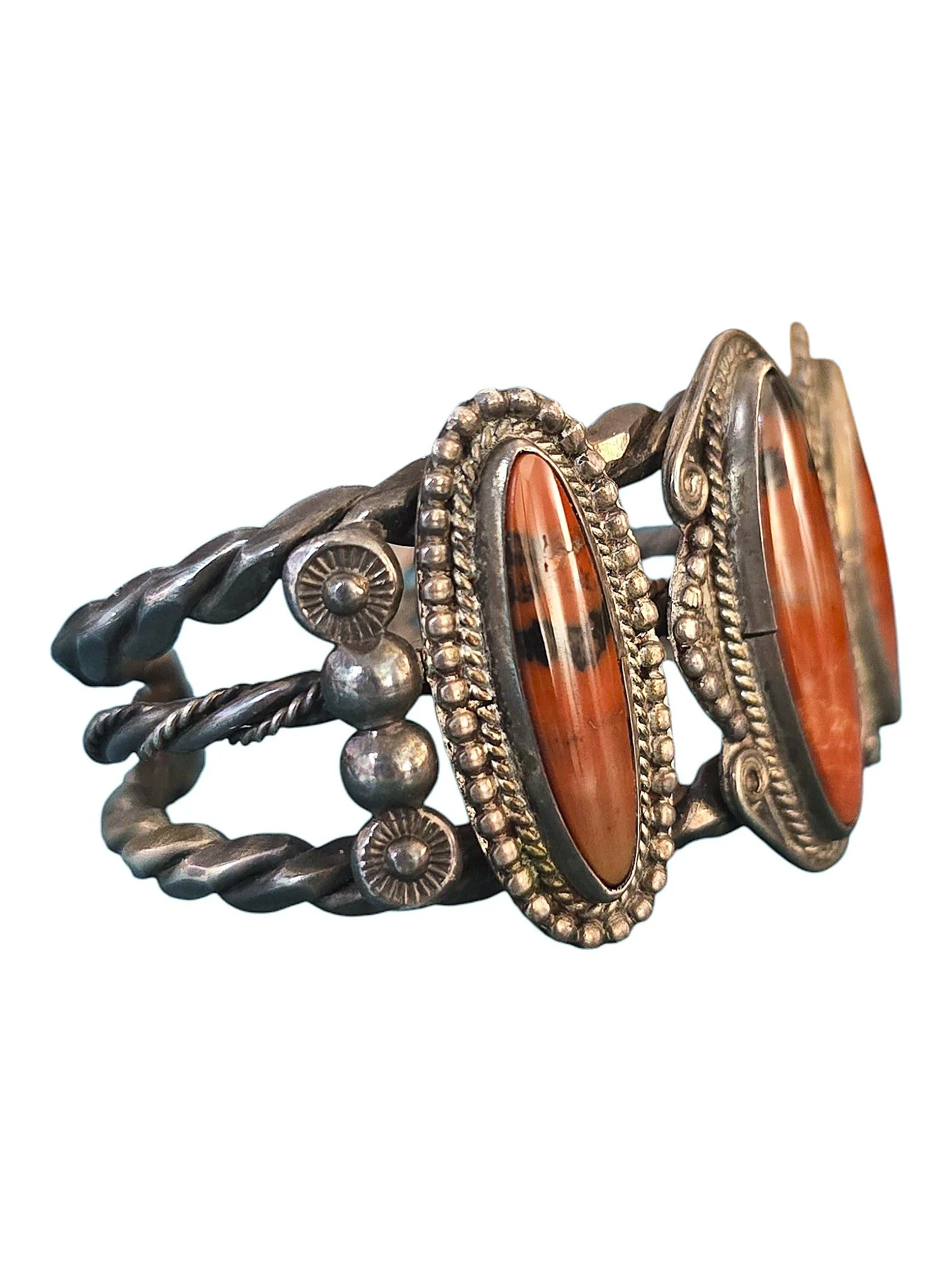 Image 2 of 5
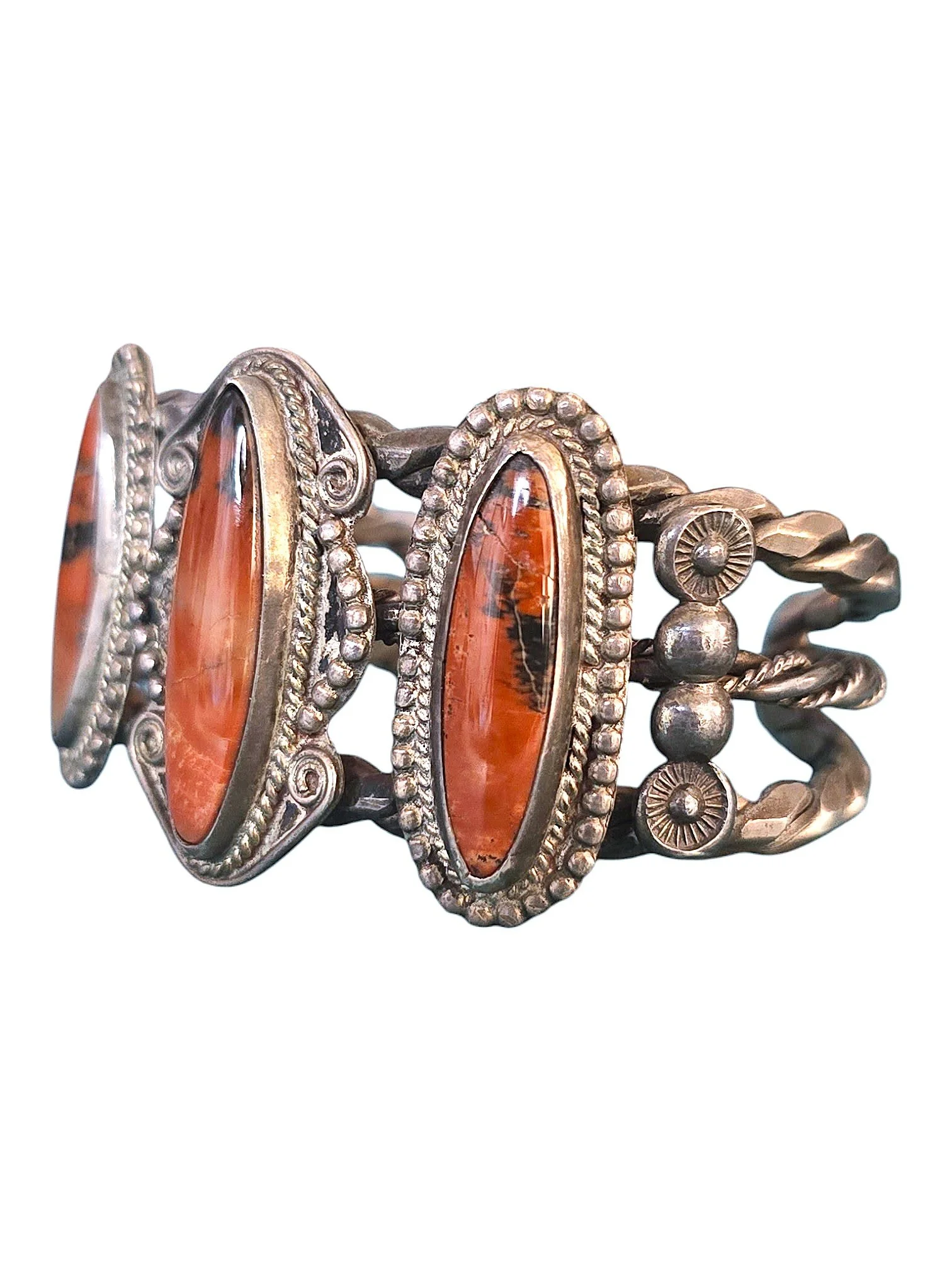 Image 3 of 5
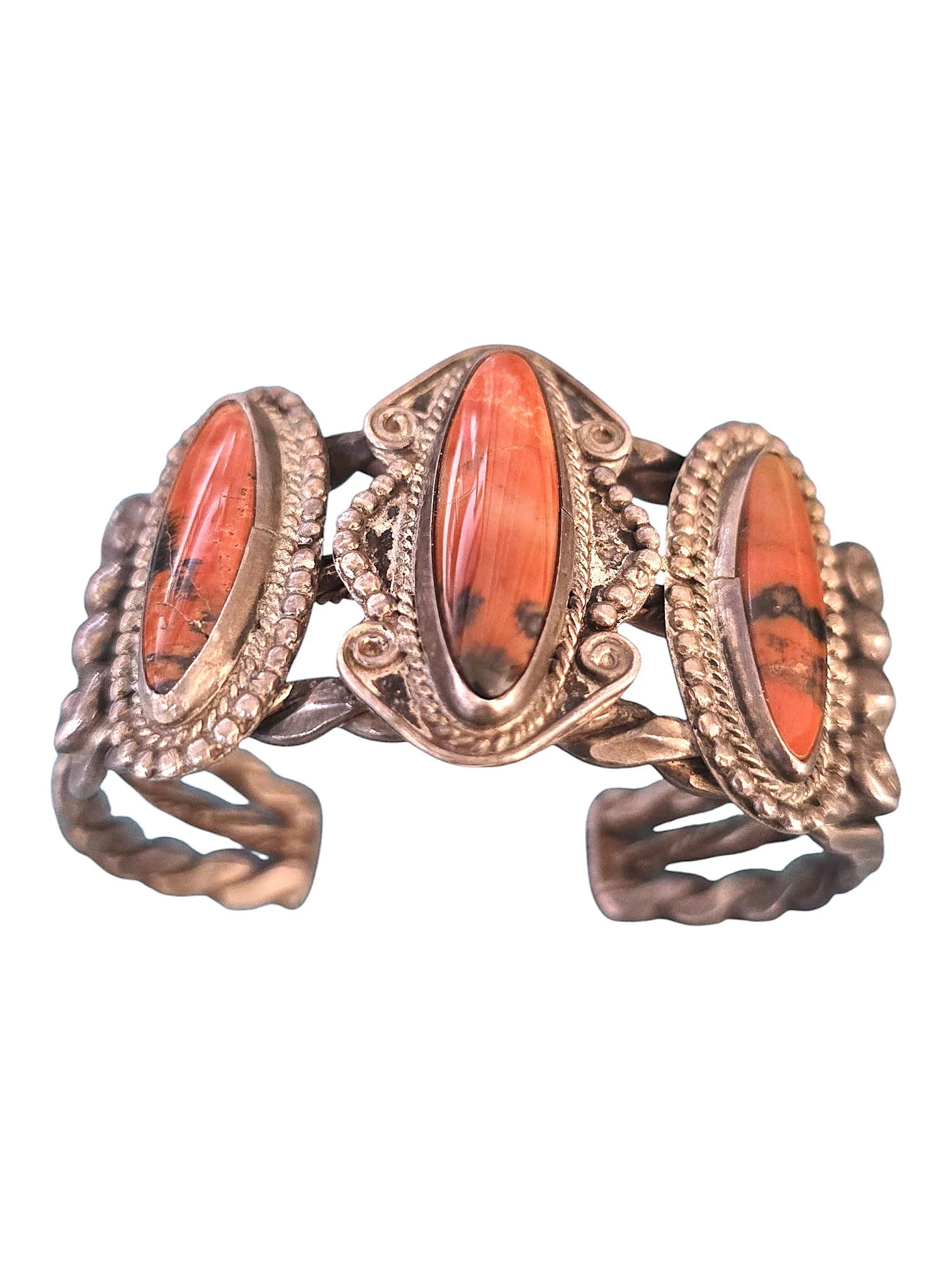 Image 4 of 5
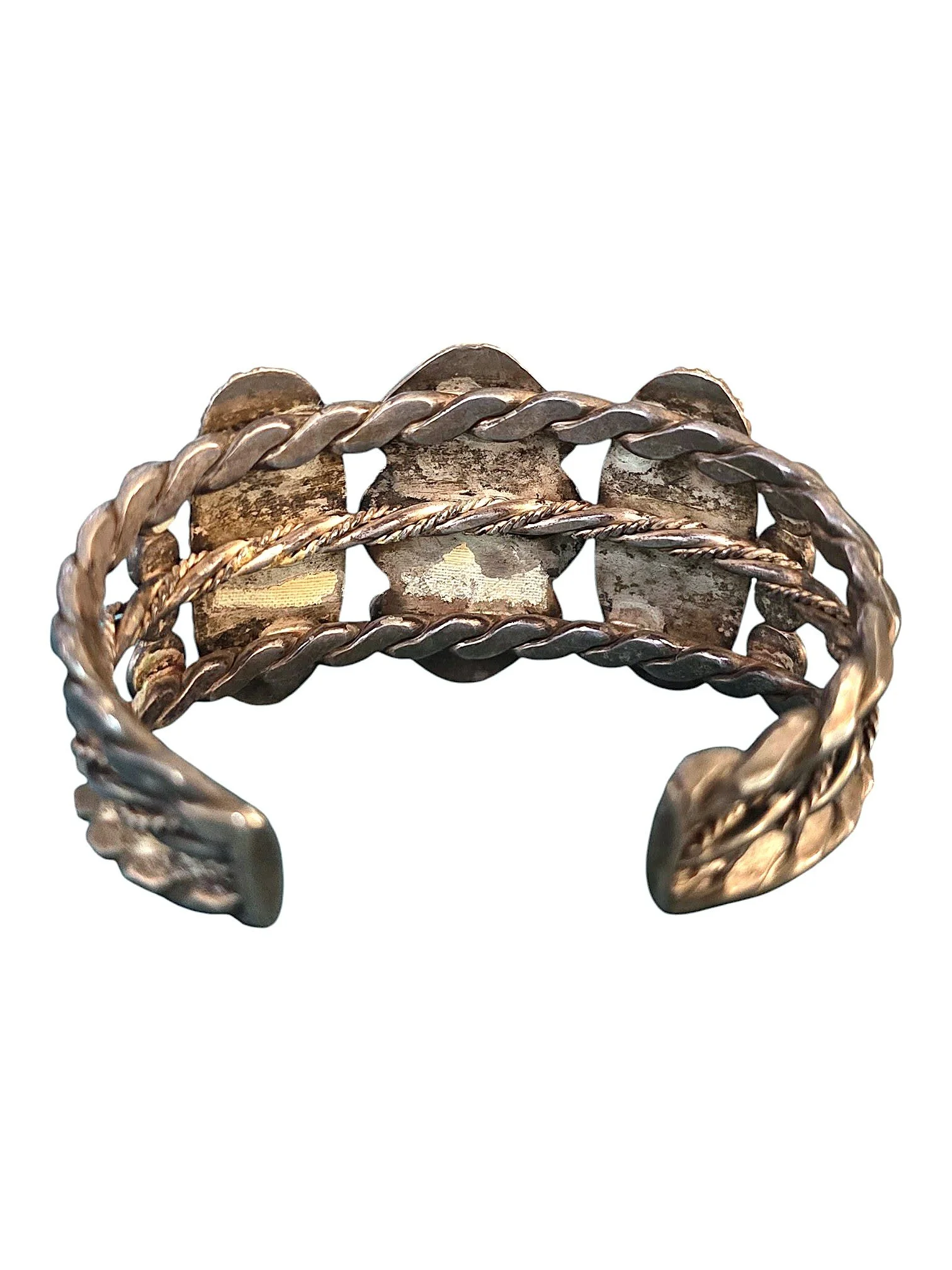 Image 5 of 5
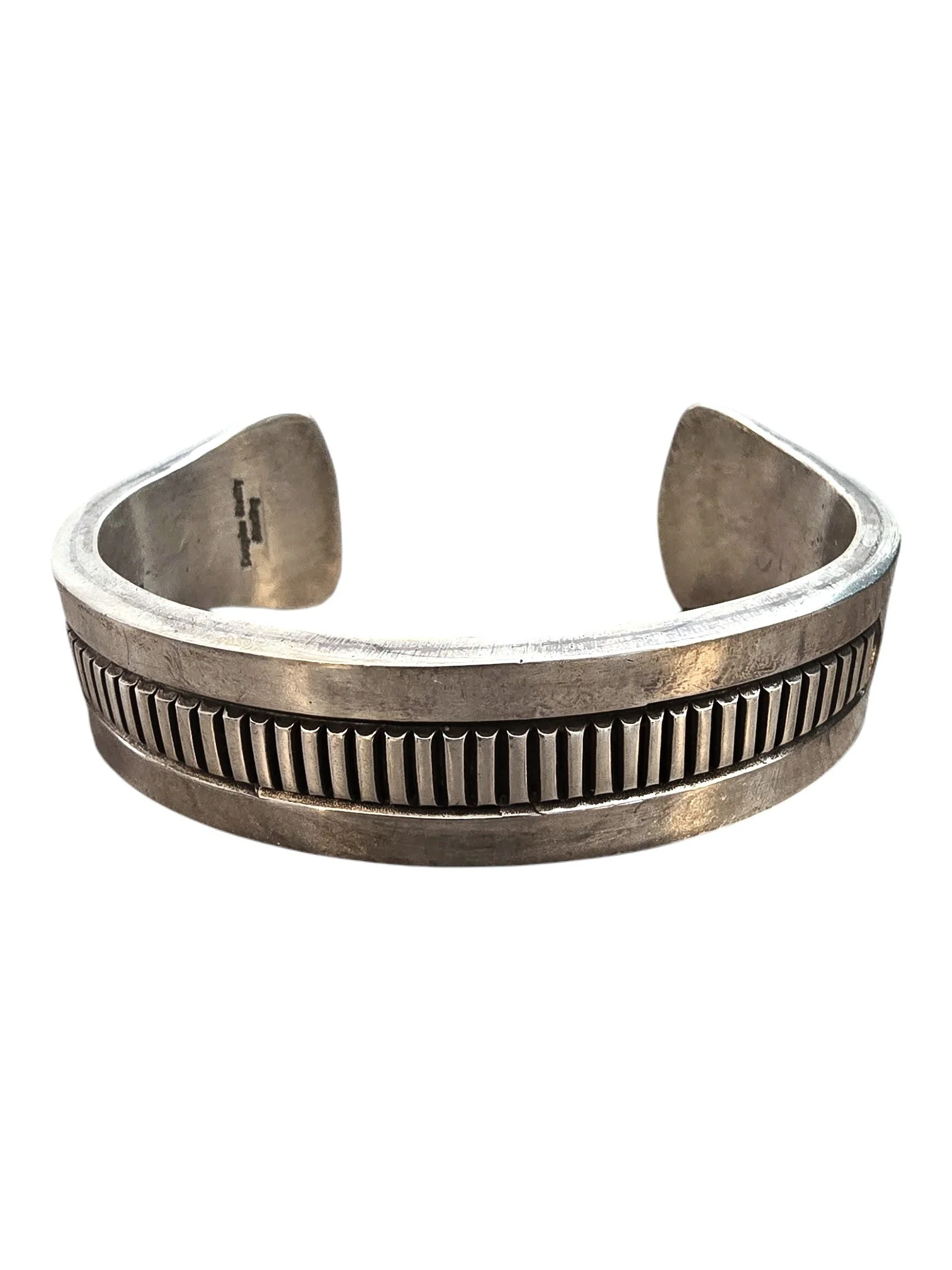
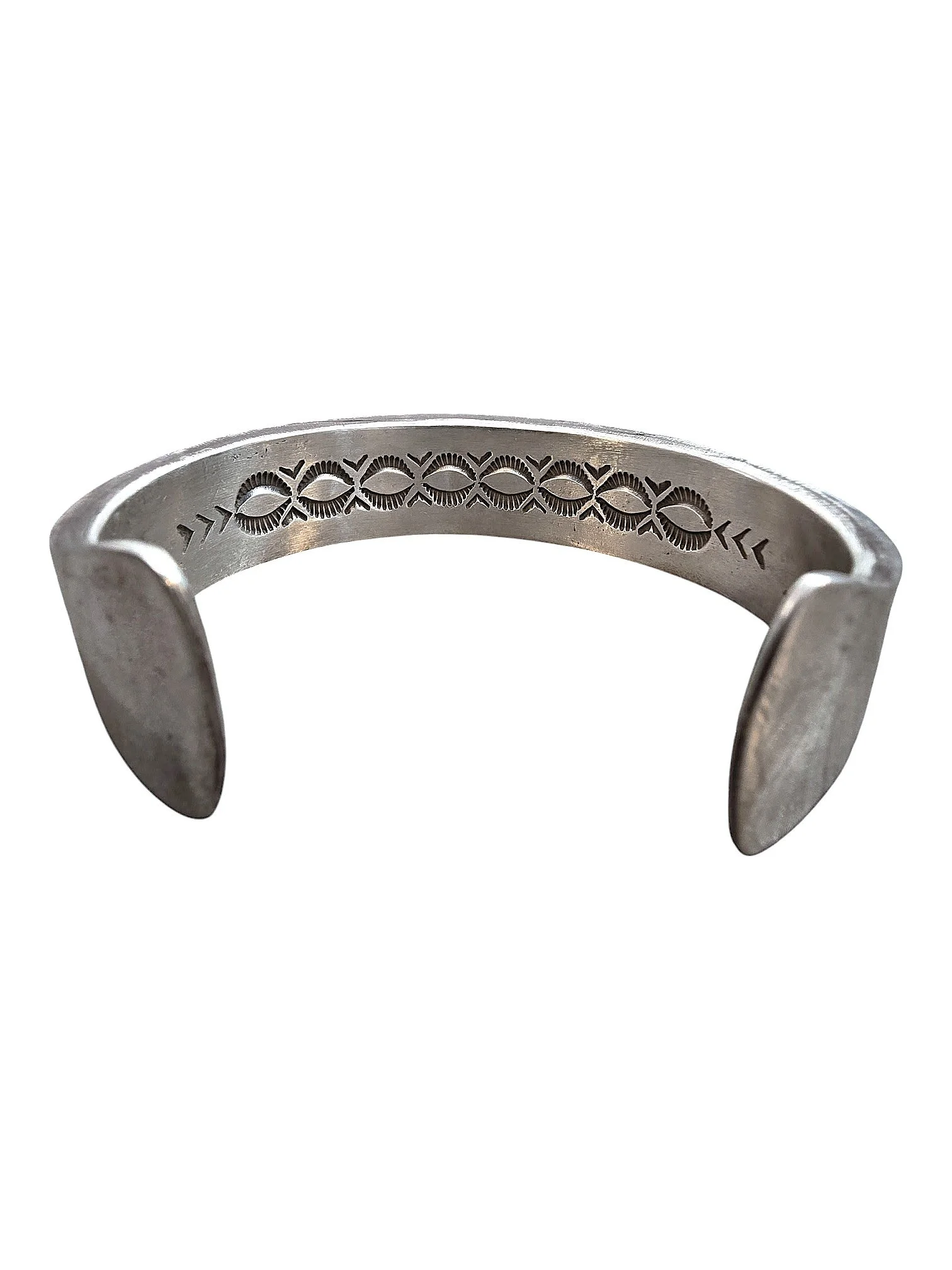
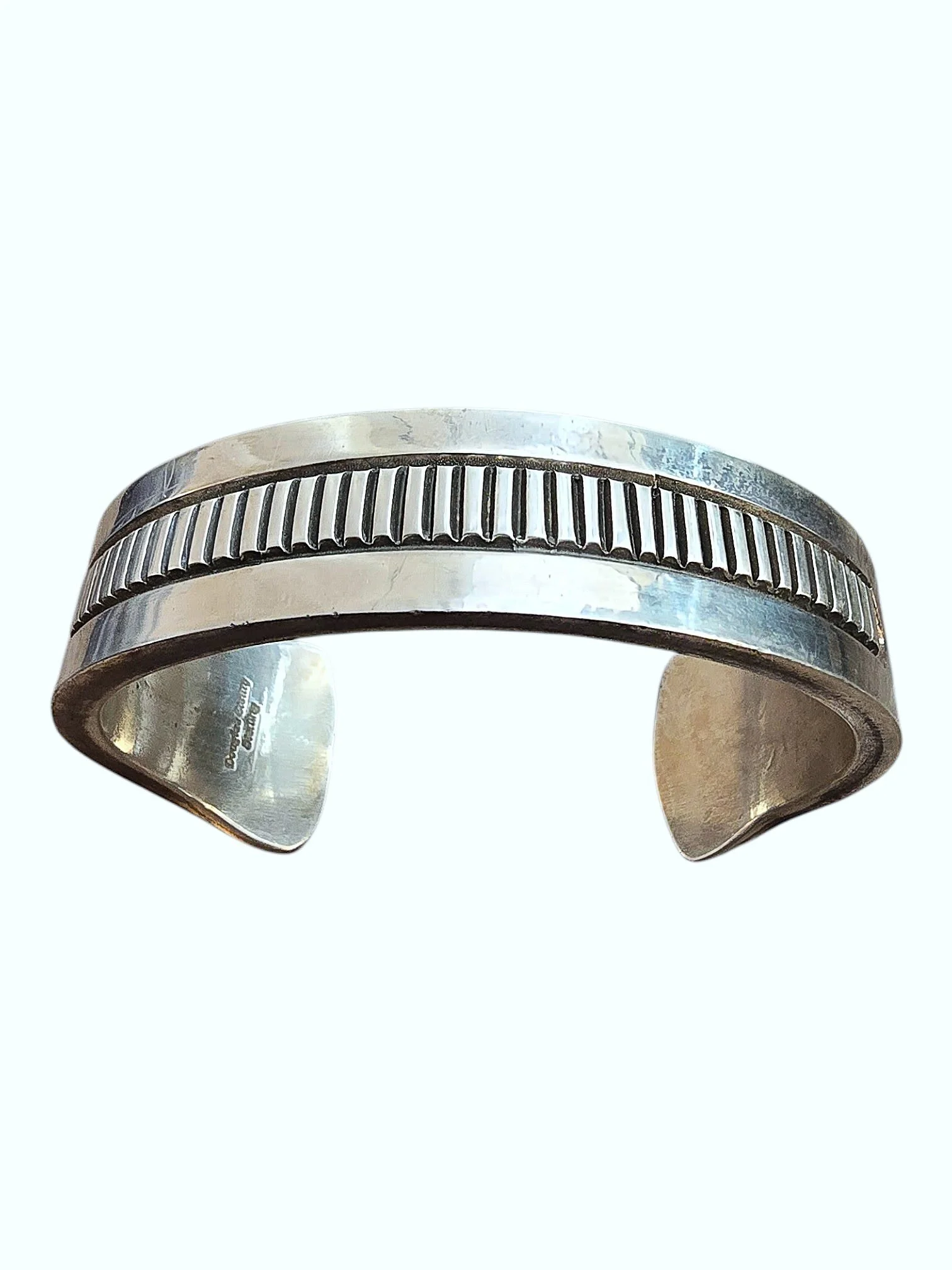
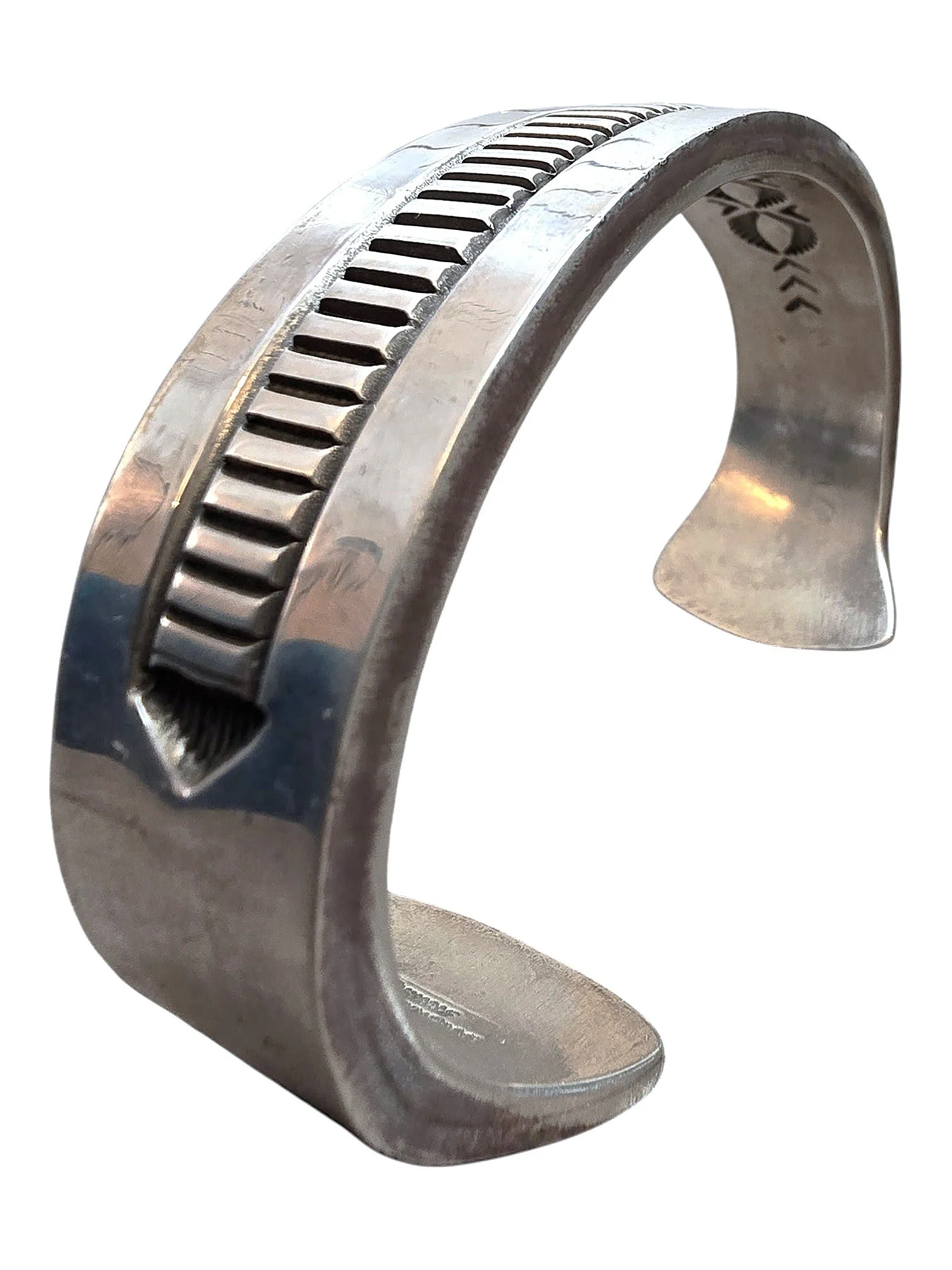
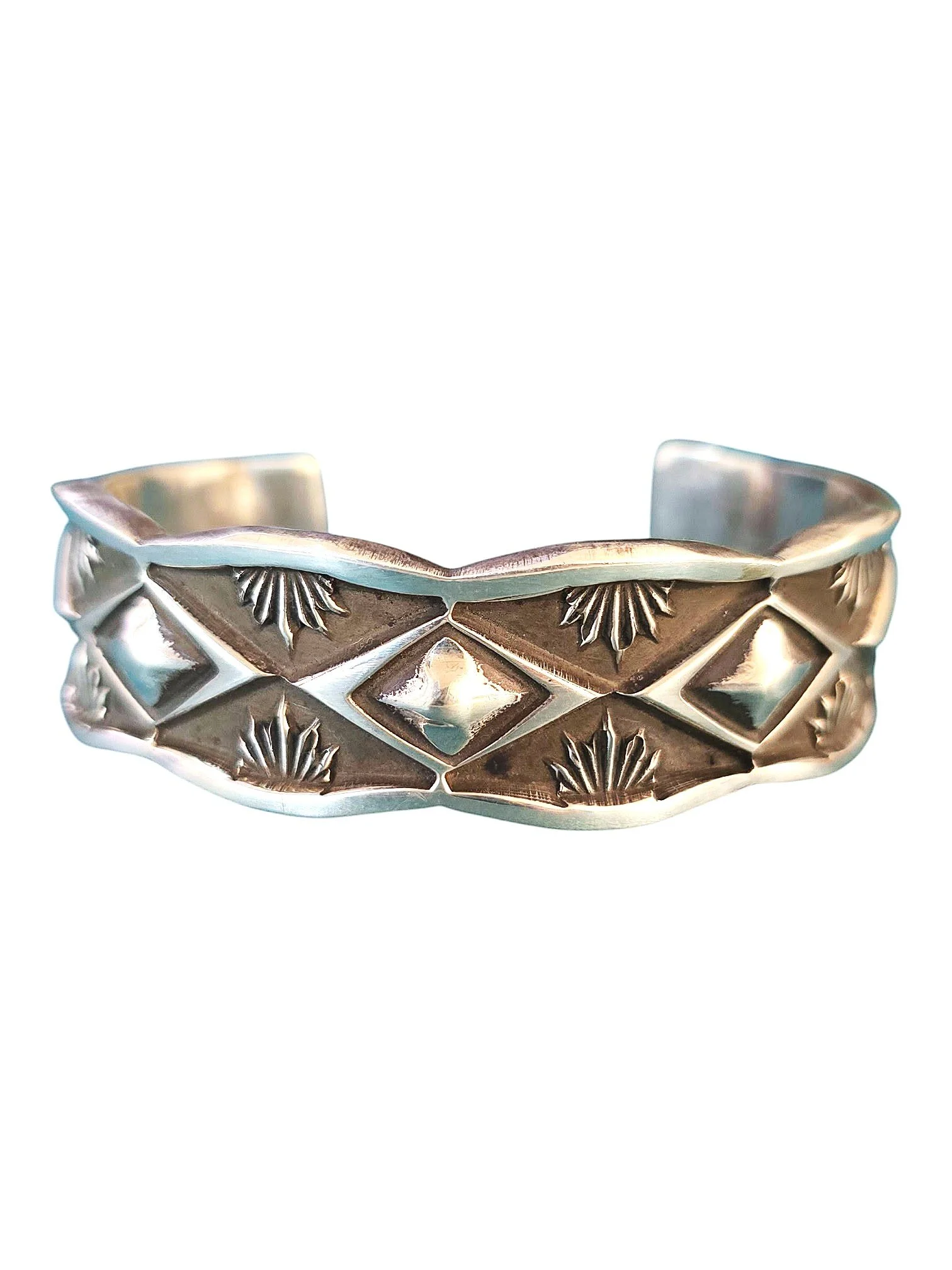
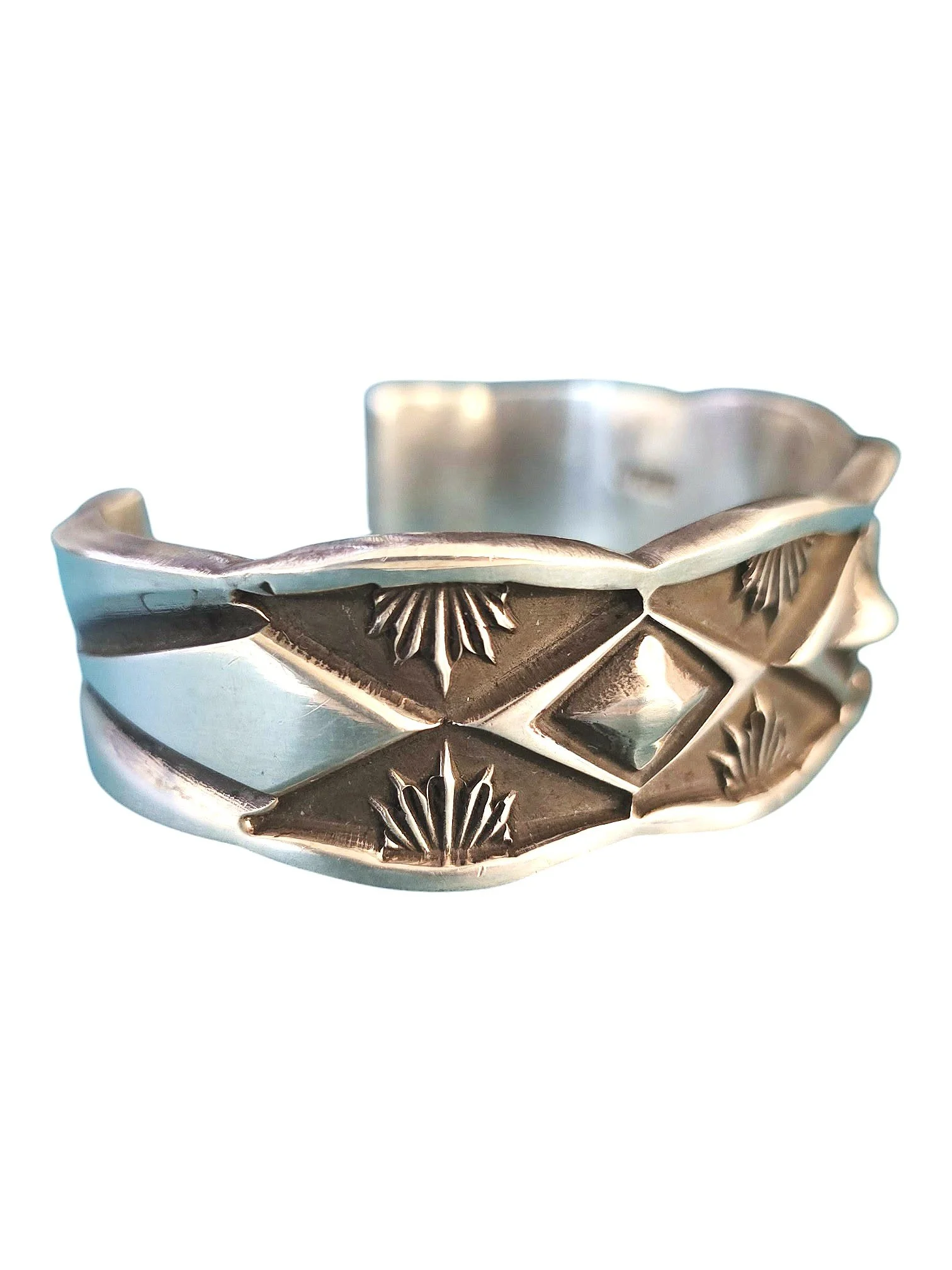
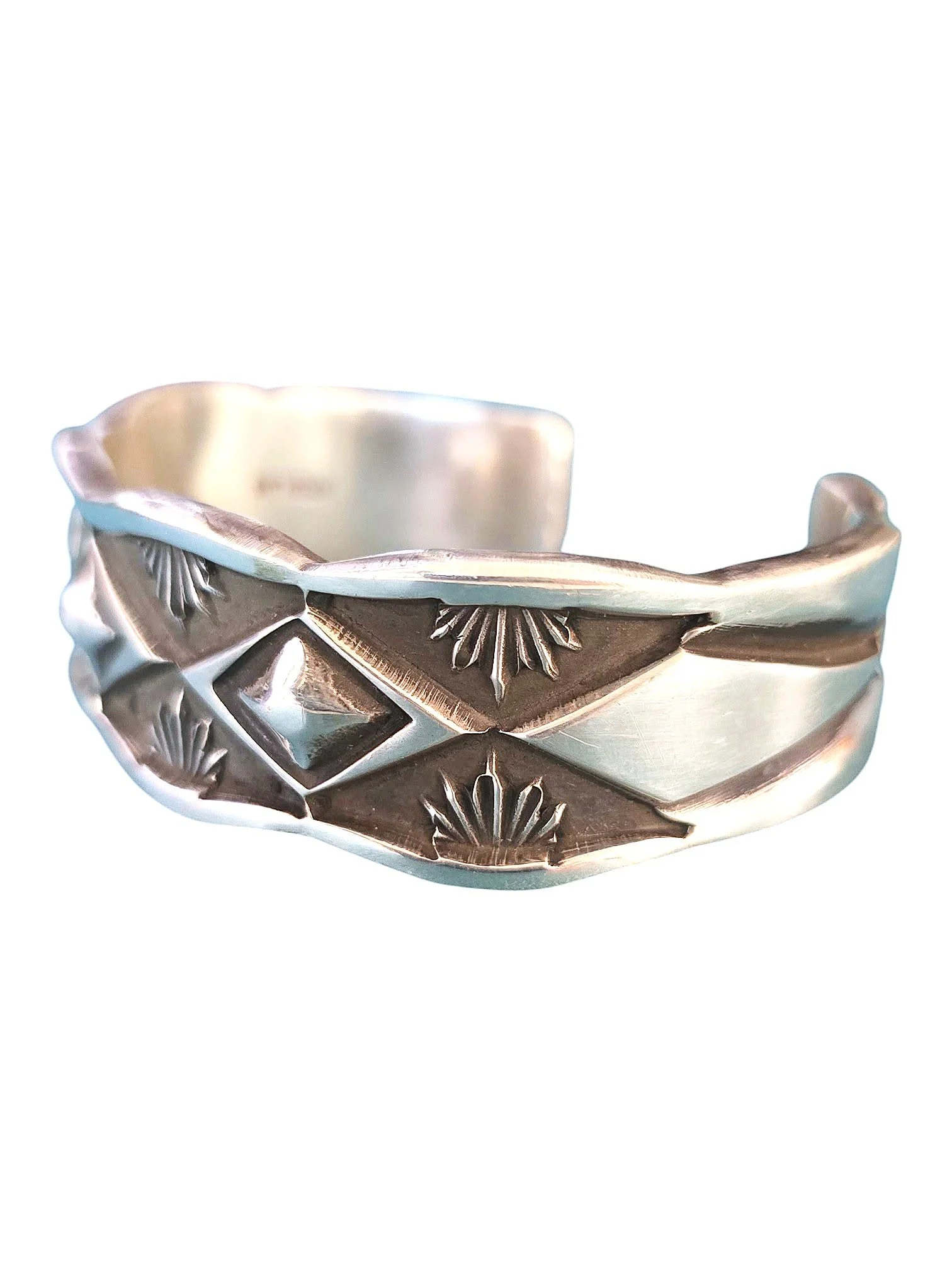
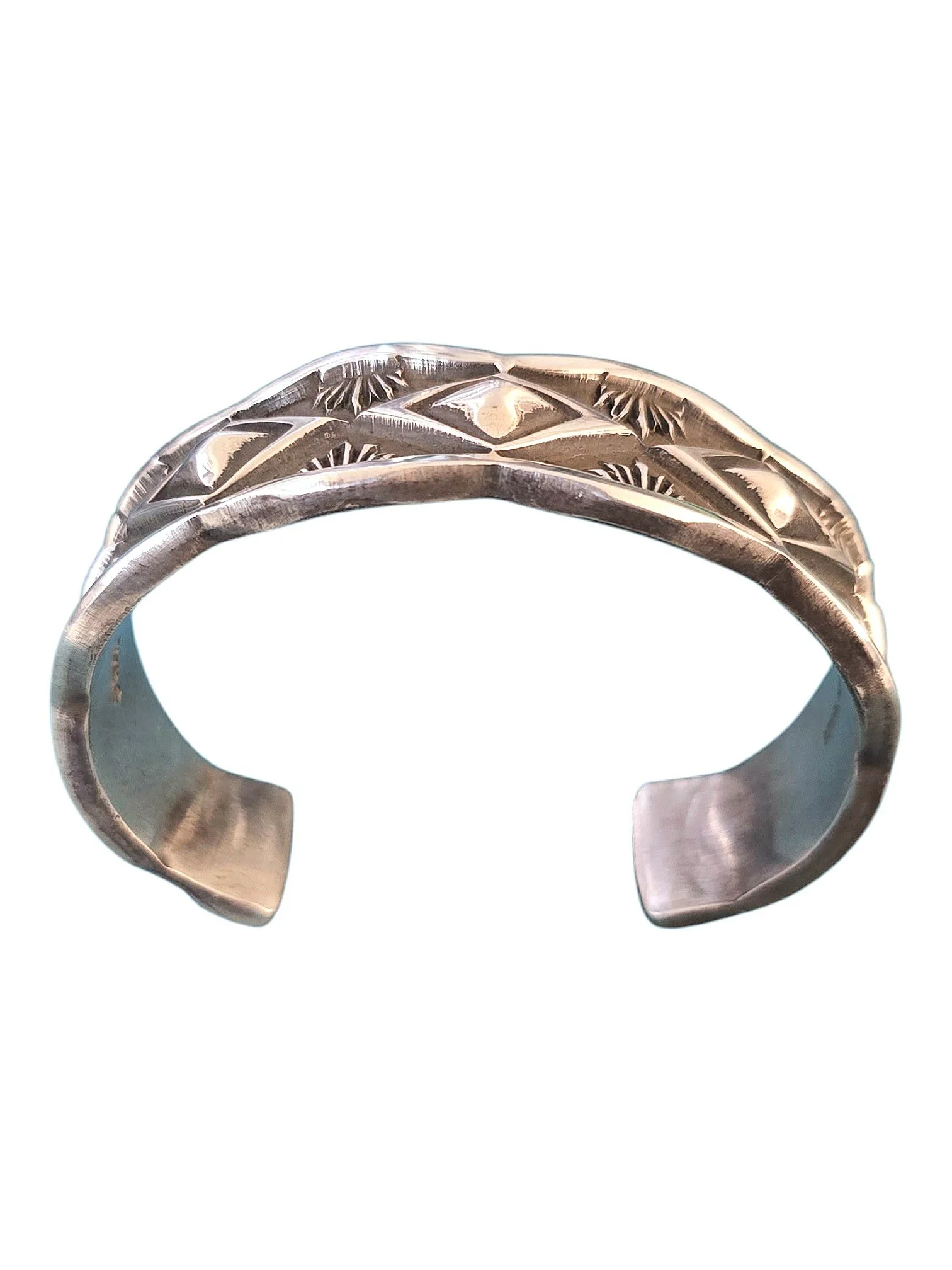
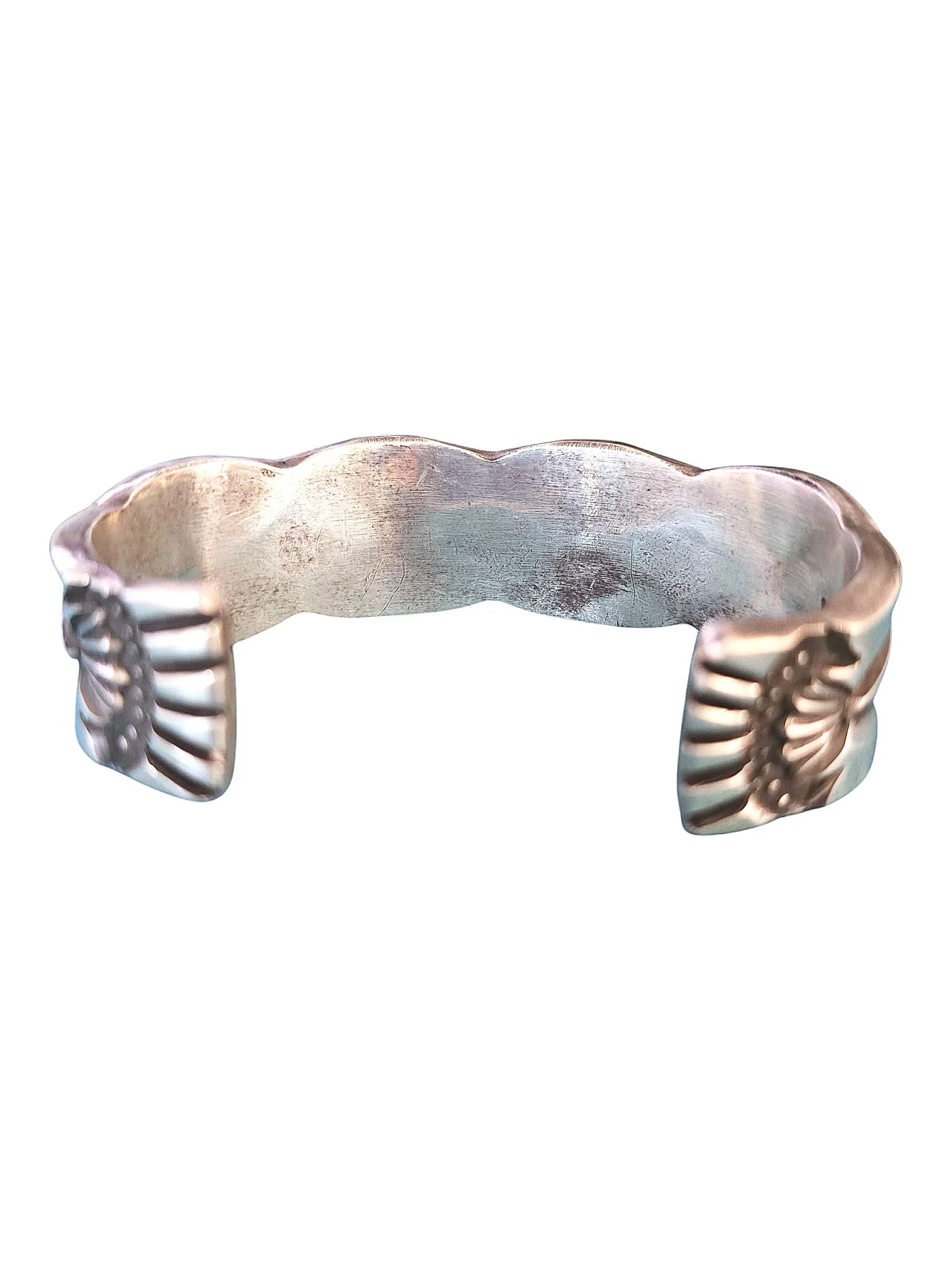
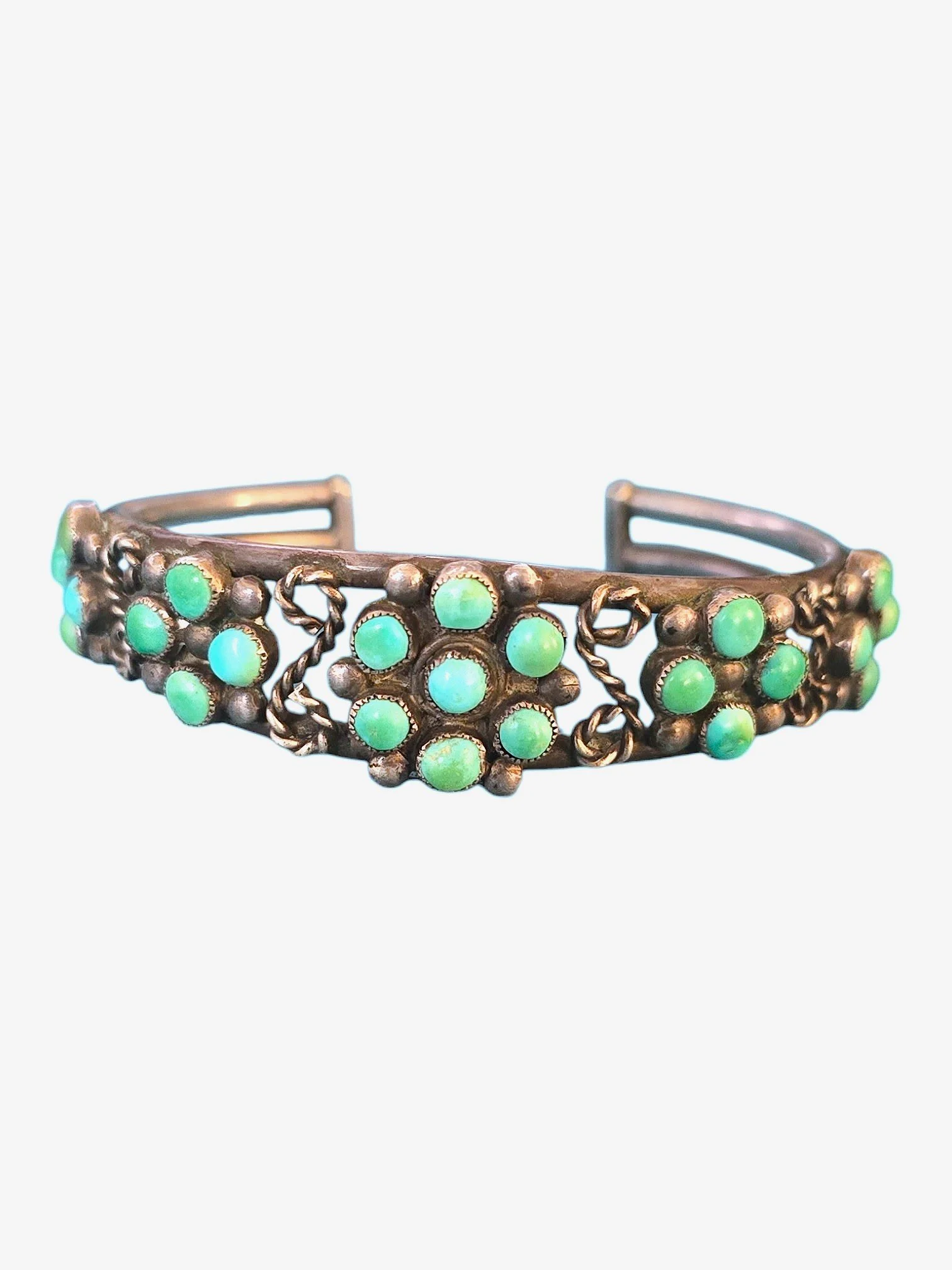
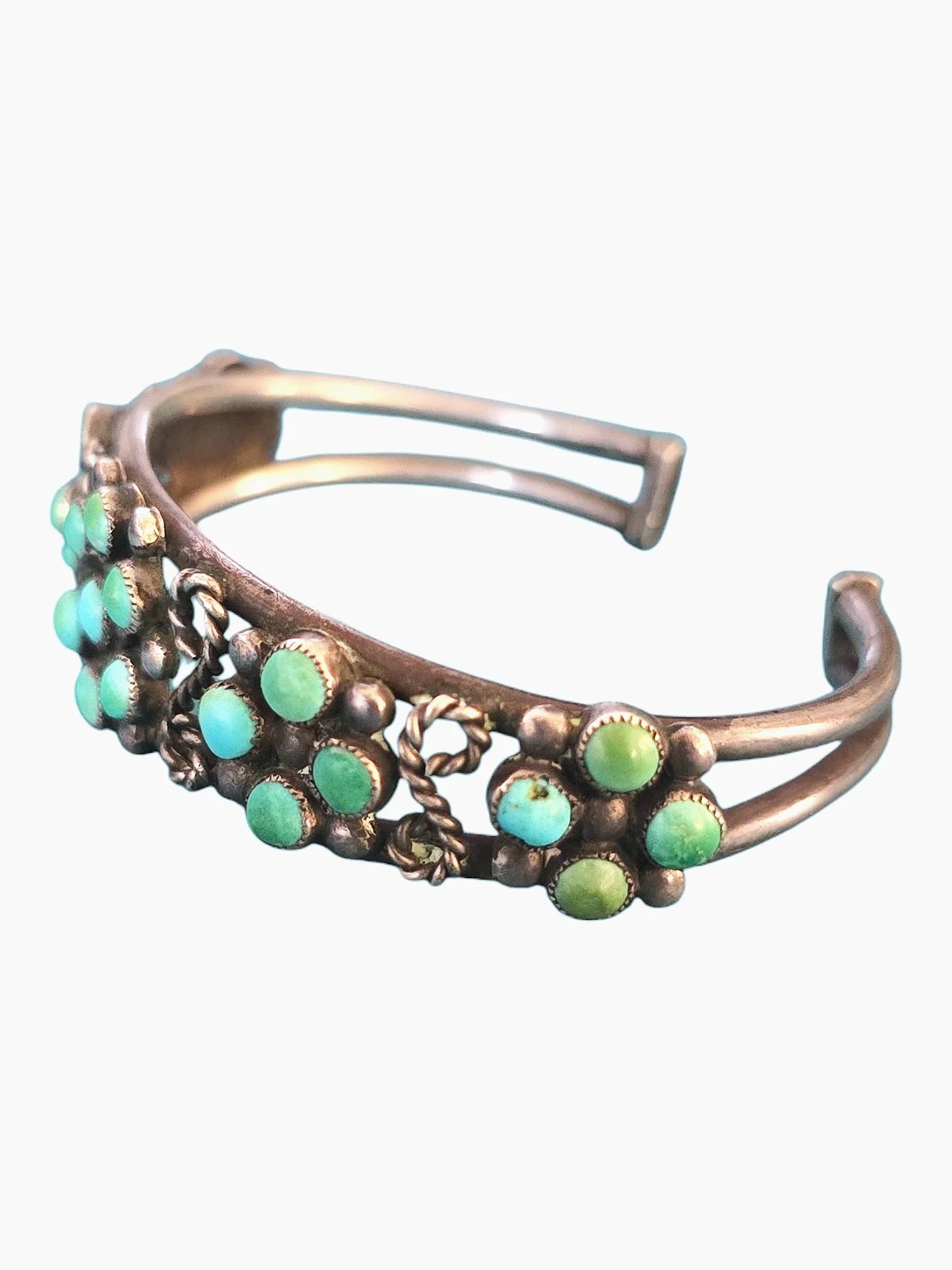
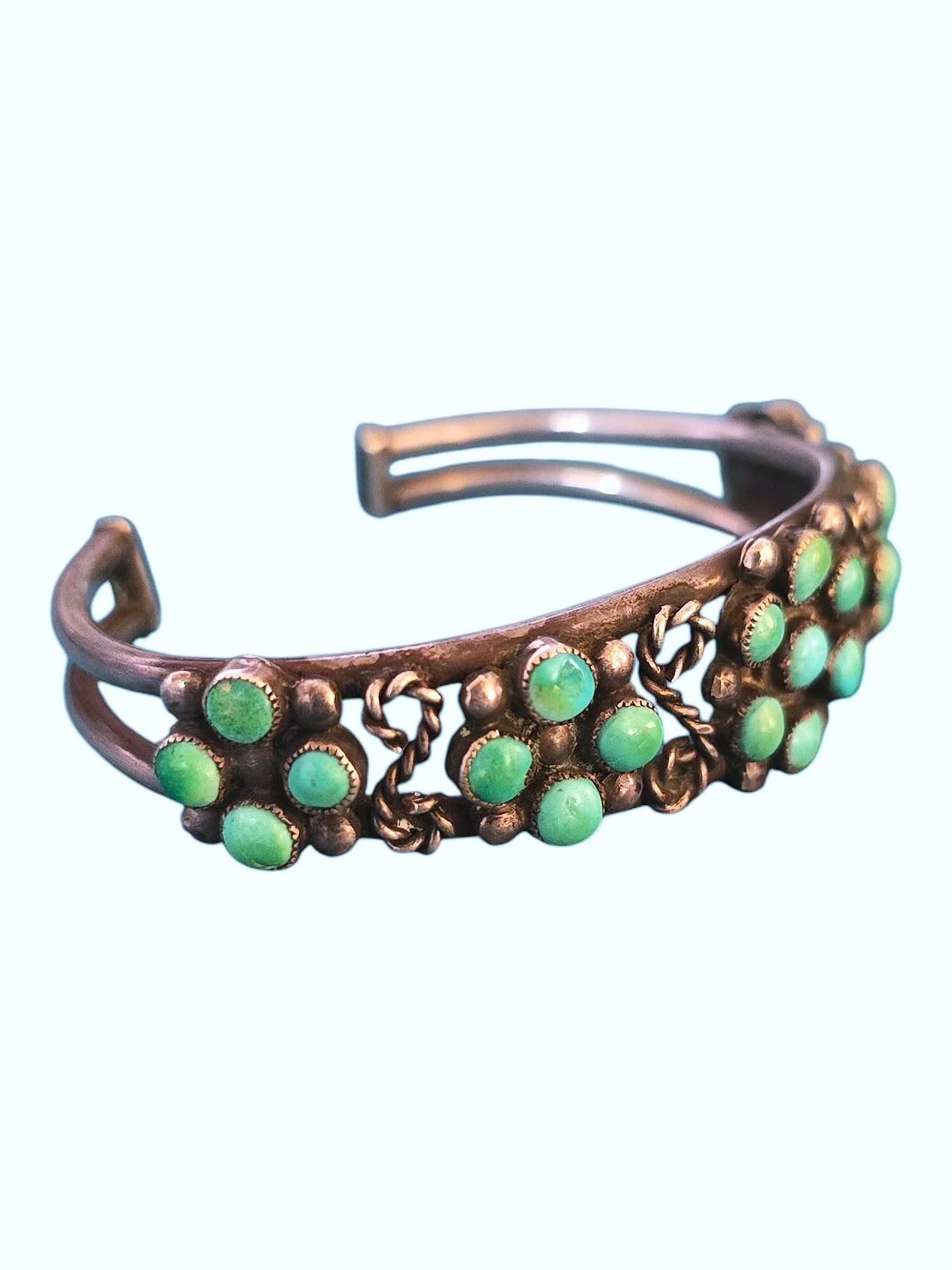
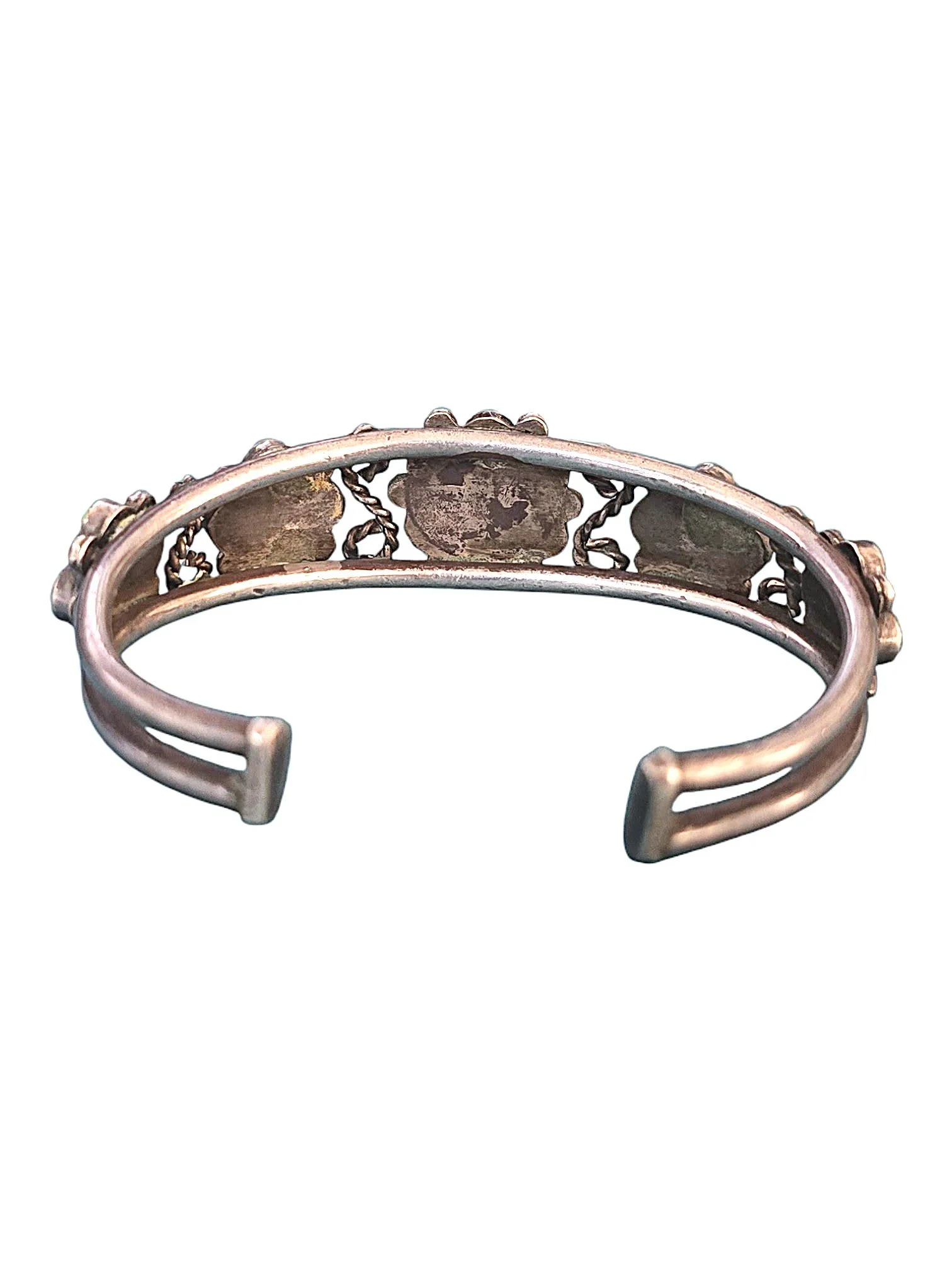
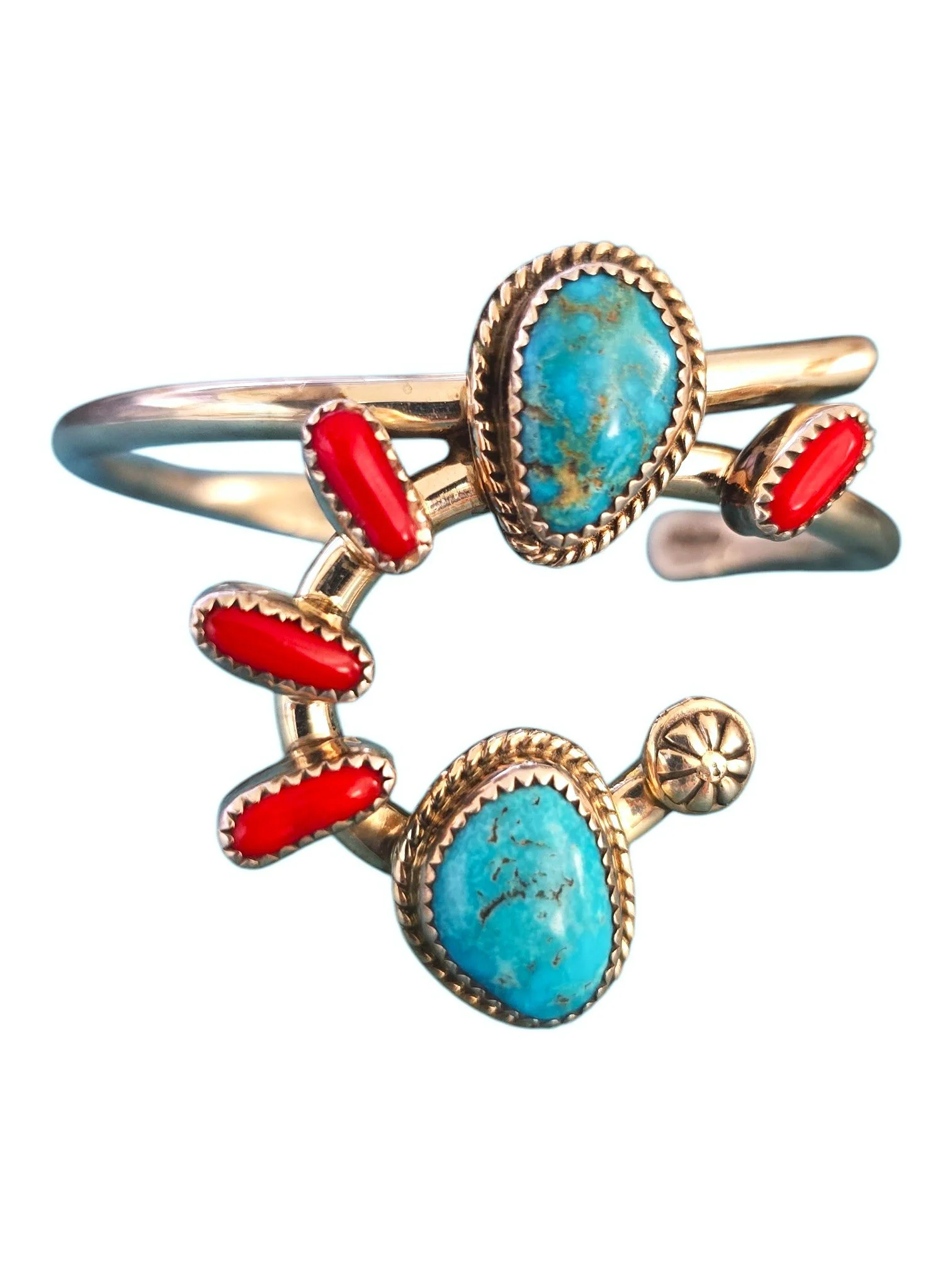
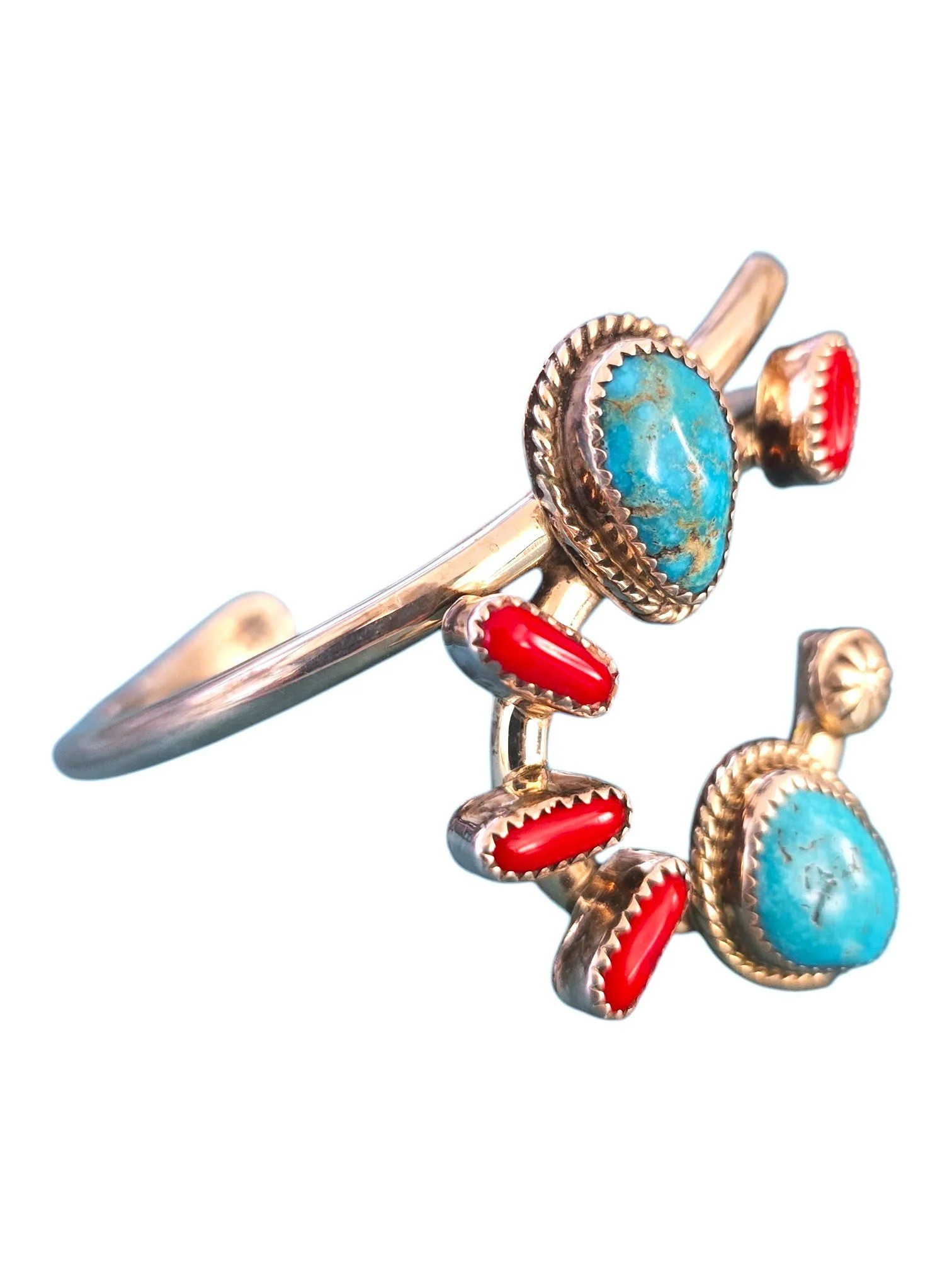
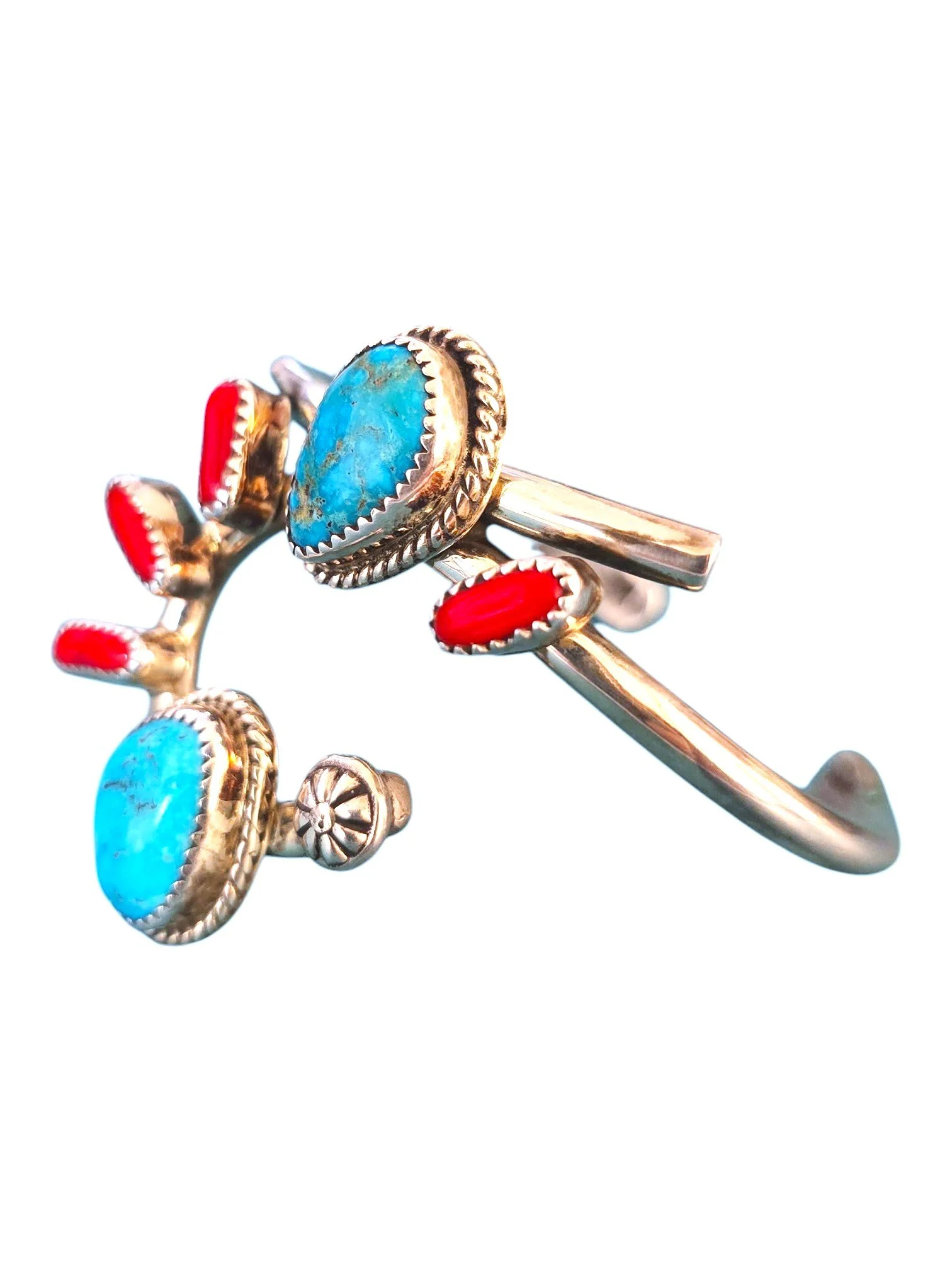
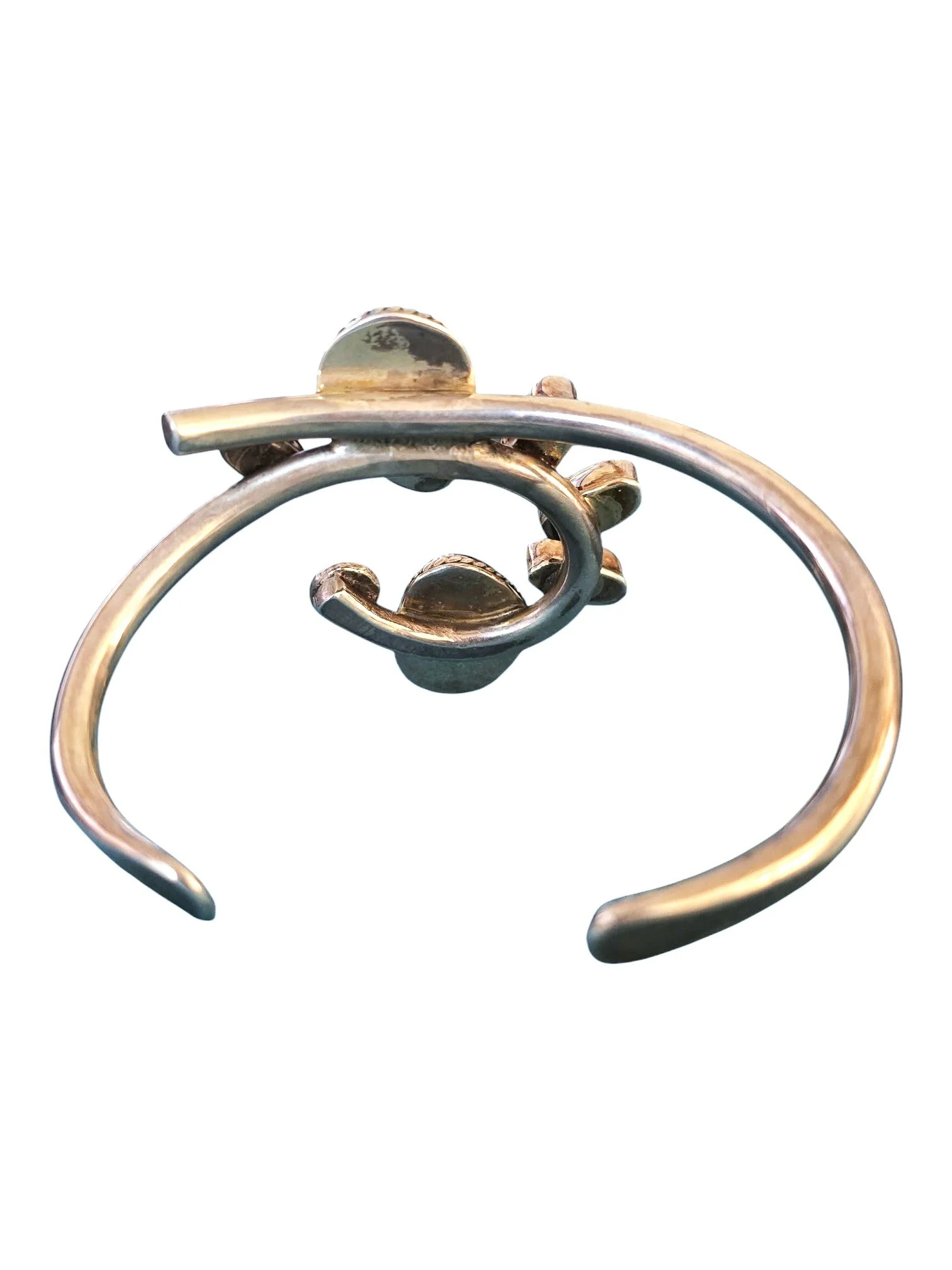
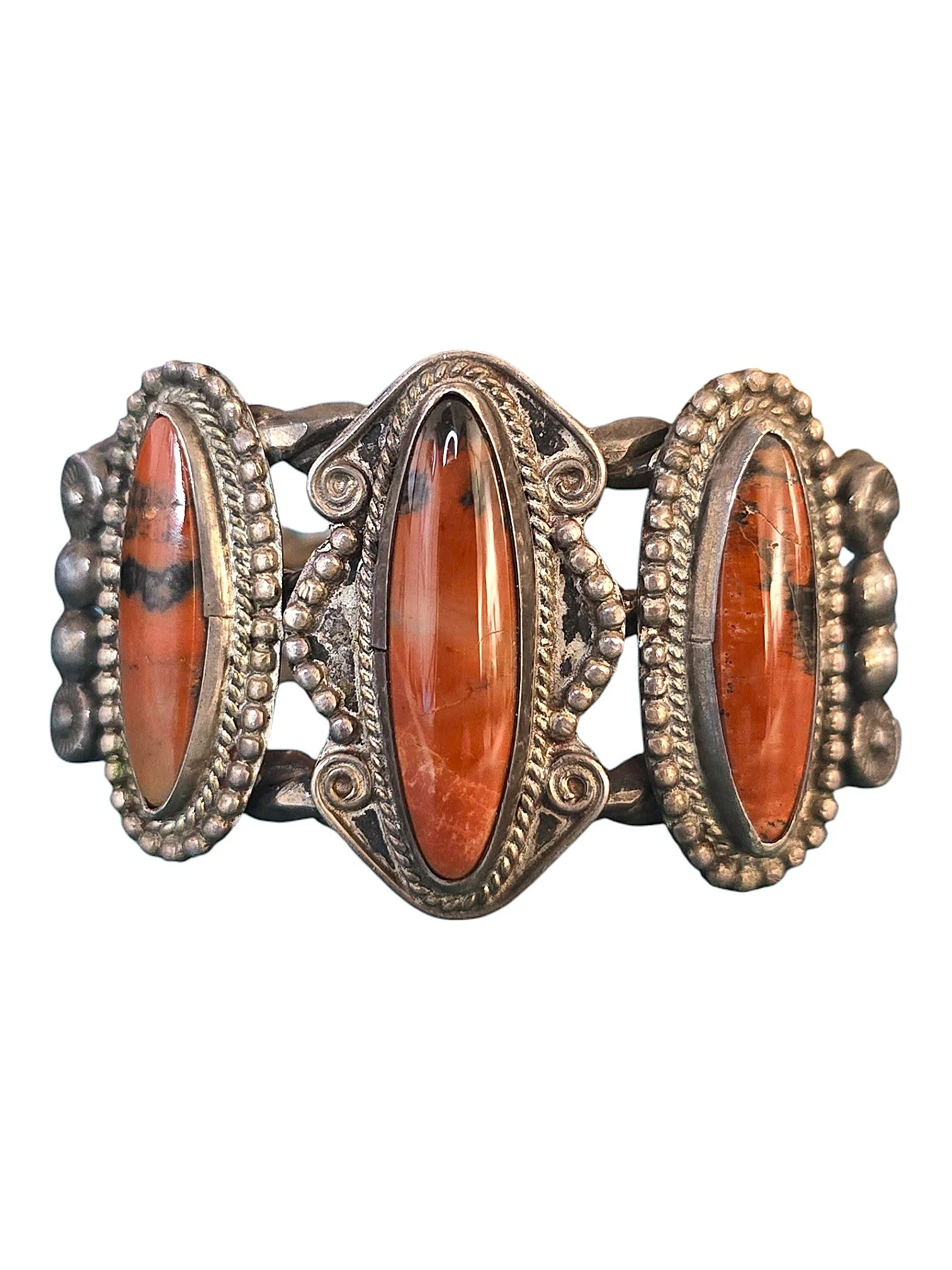
A remarkable example of early Navajo silversmithing, this substantial antique cuff, dating to approximately the 1920s–1930s, features three beautifully patterned petrified wood cabochons, intricate hand-twisted silverwork, and traditional carinated silver wires.
The bracelet showcases three elongated, oval-shaped petrified wood stones displaying rich shades of reddish-brown, burnt orange, and earthy black. Each stone exhibits distinctive natural patterns, creating a beautiful contrast against the deeply aged silver.
The stones are individually framed by elaborate silver settings featuring hand-twisted wire, decorative silver drops, and finely detailed borders. The central stone is surrounded by graceful scrolling silverwork, while the outer stones are accented with raised silver elements that add depth and dimension.
The cuff's traditional split-shank construction incorporates hand-worked carinated silver wires, a distinctive feature of early Navajo silversmithing. The combination of sculptural silverwork, richly colored petrified wood, and naturally aged patina gives this bracelet exceptional antique character.
Weighing 57 grams, this impressive cuff measures 5 1/4 inches on the inside with a 1-inch opening, giving it an approximate total inside circumference of 6 1/4 inches.
Details:
Artist: Unknown
Tribe: Navajo (Diné), attributed
Era: Circa 1920s–1930s
Stones: Three Petrified Wood Cabochons
Metal: Silver
Design: Three-Stone Split-Shank Cuff
Accents: Hand-Twisted Silver Wire, Carinated Wires, Decorative Silver Drops & Scrolling Silverwork
Inside Measurement: 5 1/4"
Opening: 1"
Total Inside Circumference: Approximately 6 1/4"
Weight: 57 Grams
Finish: Richly Aged Silver Patina
A beautiful antique Navajo cuff featuring richly colored petrified wood, intricate early silverwork, and distinctive hand-twisted carinated wire construction. Its substantial craftsmanship, traditional design, and wonderful aged character make it a compelling addition to any collection of early Native American jewelry.